
Why Transport Refrigeration Needs to Get Quieter
.jpg)
Diesel refrigeration units have long been necessary for cold chain logistics, but their noise impact on urban environments and those working around them is an increasing concern. Traditional diesel units typically operate at around 80-95 decibels, comparable to the sound of a motorcycle, so quieter alternatives are needed.
A quick note on noise…
Noise is perceived differently from how we measure it - even small adjustments in decibels (dB) have a big impact. A 10 dB increase makes a sound feel about twice as loud, so 70 dB seems twice as loud as 60 dB. For context:
- Quiet conversation is 50 dB
- Chat in a restaurant is 60 dB
- Vacuum cleaner is 70 dB
- Diesel truck at 40 mph is 80 dB
- Motorcycle at 20 mph is 90 dB
As the noise amplifies, so does the annoyance and potential harm it can cause.
A Noisy Problem
Traditional diesel refrigerated units produce significant noise from their combustion engines, which must run to maintain chilled and frozen temperatures. These diesel engines may, in fact, be close to the noise generated by a truck's main engine. For example, a traditional diesel Volvo truck was measured at 79dB, whereas diesel refrigeration engines can go up to 94dB.
This is a risk for the drivers working with these units every day. The Health and Safety Executive has documented refrigeration unit noise levels of up to 84dB - well above levels considered safe for prolonged exposure.
Sustained exposure to noise levels above 80dB can be a risk to human health, which is why the government recommends notifying workers of this risk. The Canadian government even offer a simple guide to understand the risks, asking, “do I have to raise my voice” in the workplace to be heard.
The Urban Challenge
The noise pollution from diesel refrigeration units is also a concern for operators who do urban and nighttime deliveries. Noisy deliveries going on outside your flat can be a huge nuisance and impact quality of life. This is why Local authorities provide options for residents to report on “noisy delivery” activity between 11pm-7am.
Even the UK government has attempted to mitigate the impact of deliveries with approaches such as the Quiet Delivery Schemes (QDS). This scheme asks operators to “use practices to minimise any disturbance to local residents” which includes “refrigeration equipment [to] be switched off in advance of arrival at premises”.
Cities across Europe have also implemented strict noise regulations, particularly for night-time deliveries.
In London, the London Lorry Control Scheme limits 18-tonne truck activity to certain roads at certain times of the day. Established in 1985, the scheme fines operators who fail to comply with the restrictions.
In the Netherlands, PIEK standards were developed to promote quieter technology. PIEK standards requires that equipment emits less than 60dB when measured from 7.5 meters away - approximately the volume of a normal conversation. This standard has since gained influence within Europe as a measure for quiet operation.
Of course, while these restrictions try to protect local residents from noise pollution they create real operational challenges for operators. Many retailers and logistics companies cannot deliver during quieter nighttime hours, forcing them to operate during peak traffic instead. This not only increases journey times and fuel consumption and contributes to urban congestion.
The movement toward quieter electric transport refrigeration
Electric refrigeration removes the primary source of operational noise by eliminating the diesel engine entirely. The benefits run further than that.
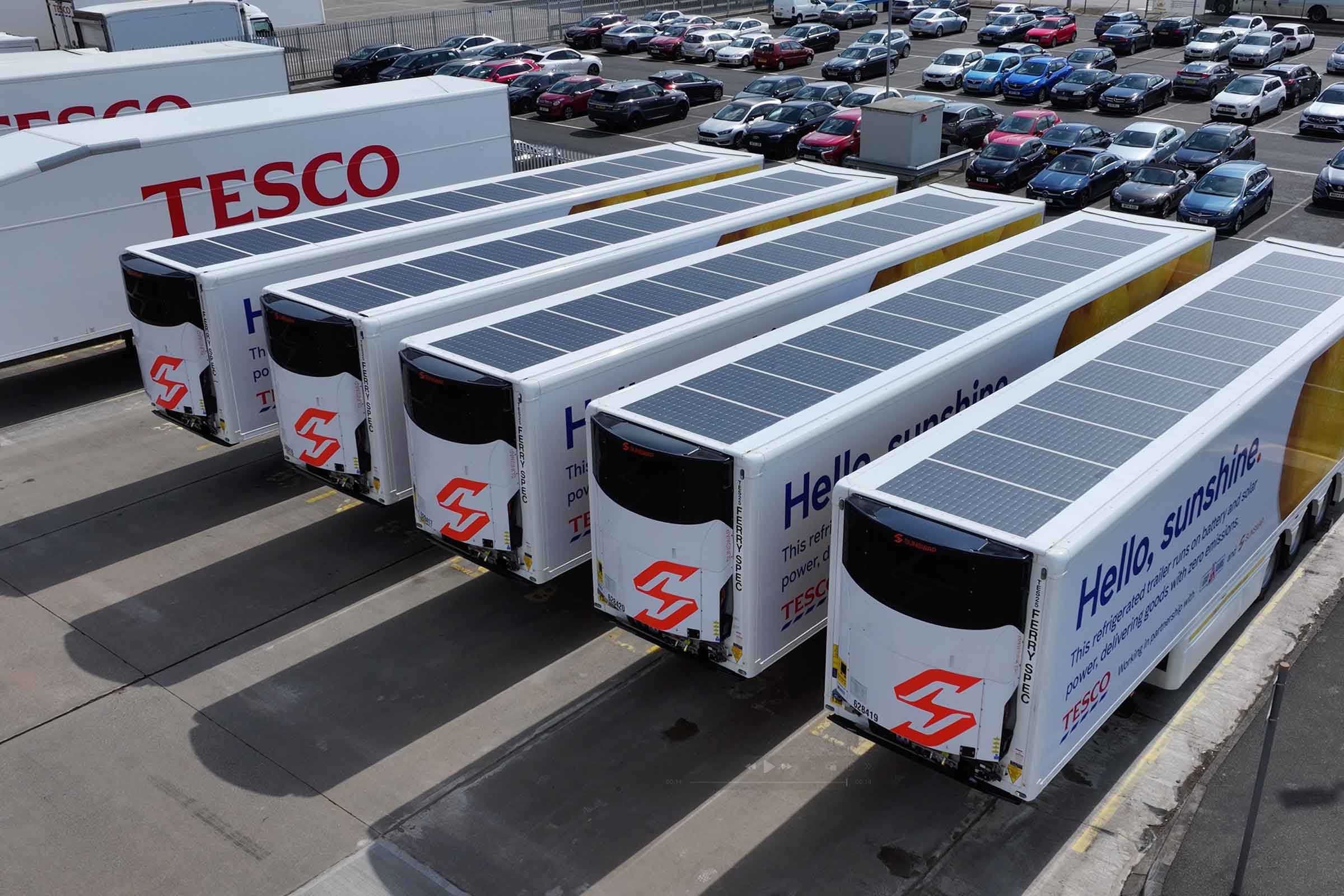
Endurance runs on battery and solar power, producing zero emissions and a fraction of the noise of a diesel unit. Operators running Endurance can make deliveries around the clock, evidence their environmental performance, and give drivers a better working environment.
Critically, Sunswap Endurance was measured as PIEK compliant, in an independent measurement, making it suitable for night deliveries and city-centre routes where noise restrictions apply.
Quieter units open up off-peak delivery windows that diesel closes off – potentially reducing journey times and fuel consumption by avoiding congested hours. Drivers and depot staff work in a less hazardous environment. Operators maintain better relationships with the communities they serve. The case isn't even about regulatory compliance; it's a more efficient, lower-cost operation.
If noise is a problem in your fleet, it's one Endurance already solves.
FAQ: Why Transport Refrigeration Needs to Get Quieter
1. Why is noise from transport refrigeration units problematic?
Traditional diesel refrigeration units operate at around 80-95 decibels, comparable to a motorcycle's sound. This noise level can disrupt urban areas, impact worker health, and contribute to environmental noise pollution.
2. How does refrigeration unit noise affect workers?
The Health and Safety Executive has recorded refrigeration unit noise levels of up to 84 decibels in working environments. Prolonged exposure to noise above 85 decibels can cause hearing damage, posing a serious occupational health risk to drivers, depot workers, and loading bay staff.
3. Are there regulations limiting refrigeration unit noise?
Yes. Cities like London have noise regulations, particularly for night-time deliveries. For example:
The London Lorry Control Scheme restricts 18-tonne trucks to certain roads at specific times to reduce noise pollution.
The PIEK standard in the Netherlands limits noise to 60 decibels at 7.5 meters, encouraging quieter transport solutions.
4. How do noise regulations impact logistics operations?
Noise restrictions often prevent retailers and logistics companies from making deliveries during night-time hours, forcing them to operate in peak traffic. This increases fuel consumption, journey times, and urban congestion.
5. How can electric refrigeration reduce noise pollution?
Electric refrigeration eliminates the diesel engine, removing the primary source of noise. The only remaining sounds come from fans and compressors operating at significantly lower noise levels.
6. What are the benefits of quieter refrigeration units?
Operational Flexibility – Allows deliveries during off-peak hours without noise complaints.
Worker Wellbeing – Reduces noise exposure for drivers and warehouse staff, improving workplace safety and retention.
Community Relations – Minimises disruptions in residential areas, leading to fewer complaints.
Cost Efficiency – Enables faster deliveries and lower fuel consumption by avoiding congested hours.
7. Are quieter refrigeration units only beneficial for night-time deliveries?
No. While noise restrictions often focus on night-time operations, reducing noise improves working conditions throughout the day and allows for more flexible delivery schedules.
8. How does Sunswap address noise from refrigeration units?
Sunswap’s Endurance is a battery and solar-powered refrigeration unit with zero emissions and quieter operation. It helps fleet operators reduce noise, meet regulations, and run a more efficient operation.
9. What’s the business case for switching to quieter refrigeration?
Beyond regulatory compliance, quieter refrigeration offers practical benefits such as improved delivery efficiency, lower operating costs, better worker retention, and enhanced community relationships. These advantages make the case for quieter, cleaner refrigeration straightforward.
News and Updates
Stay up to date with the latest developments from Sunswap.